Editorial.
A brand guidelines template with a numbered contents page, the sections listed beside the page and each figure on a card. The first of Linyal’s four templates, and the one with the most settings.
Updated
In short. Editorial is a Linyal brand guidelines template for a guideline website: the brand’s name as the cover’s title, a numbered contents page, the sections listed down the left side, and each figure on a rounded card. It has every layout Linyal offers and its own settings for the grid, the cover’s height and the section ground.
What it looks like
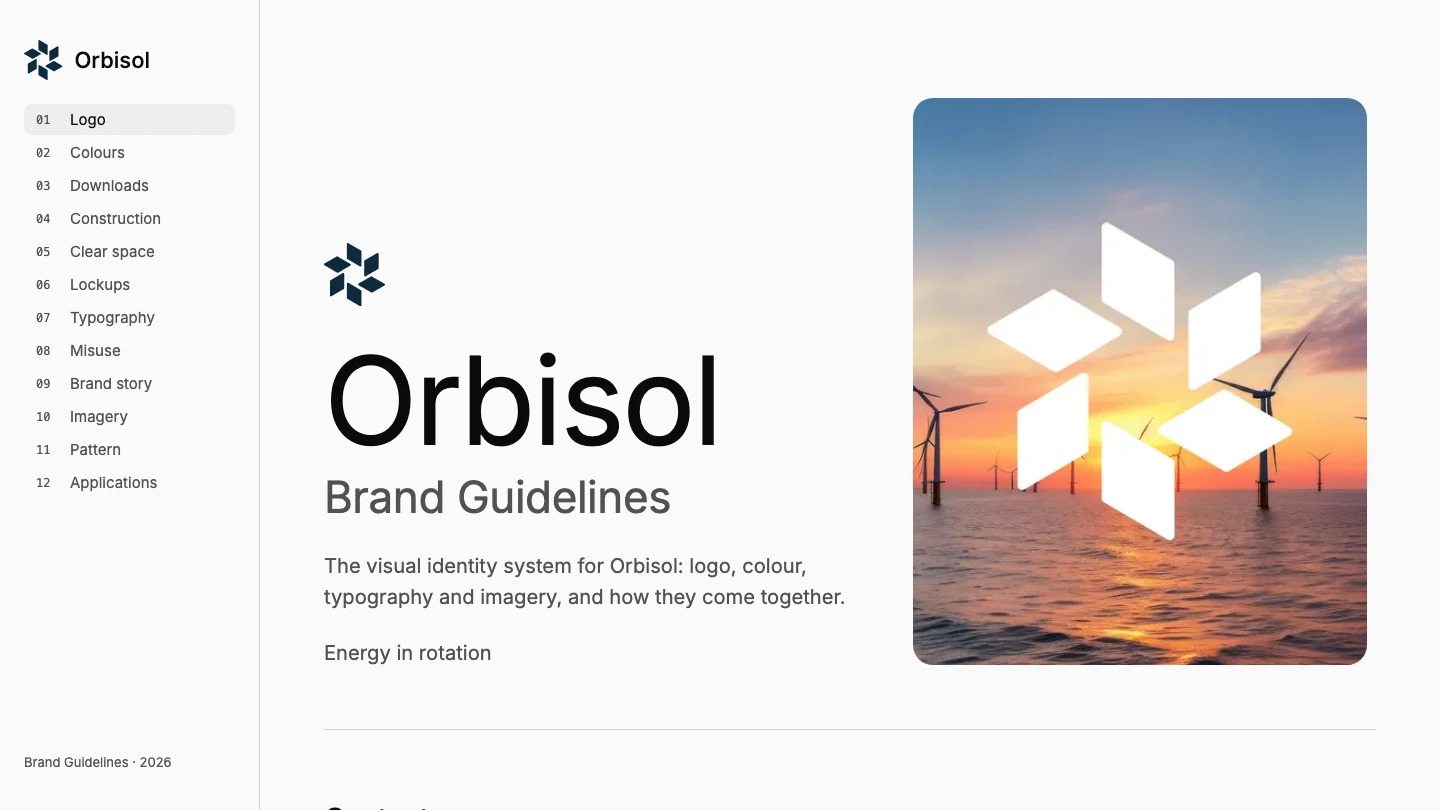
- Cover
- The brand’s name as the title, as large as its column allows, with Brand Guidelines under it. Split sets a picture beside it; Field sets it on the brand’s accent colour.
- Contents
- After the cover, a numbered contents page in two ruled columns, each line a link to its section.
- Sections
- Listed down the left side of the page, numbered, and in view as you read. Each section’s number stands beside its title.
- Corners
- Rounded, 20 px.
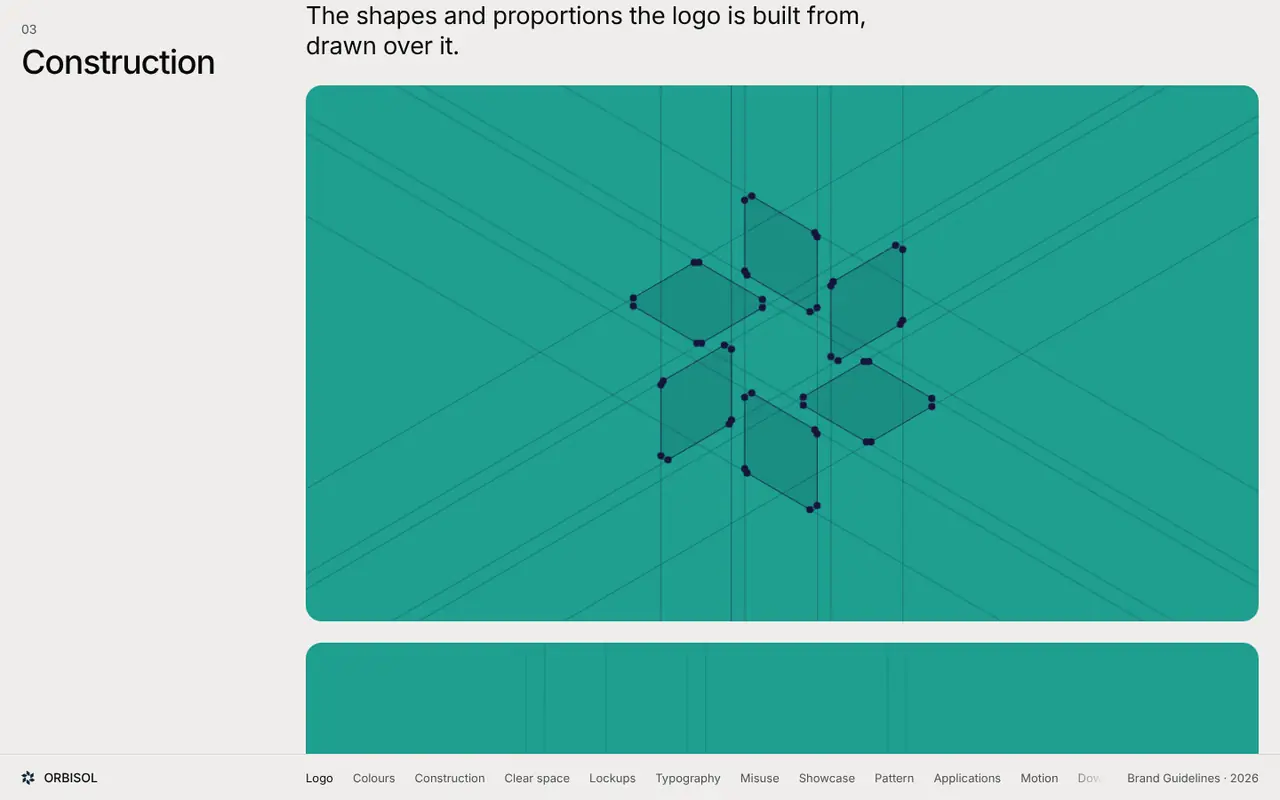
- Clear space
- Drawn as a band one x wide around the logo, measured on each side.
Layouts and settings
Editorial holds every layout Linyal has, so it is the template to choose when you want the most say over each section. For example:
- Logo
- Lead or Even
- Colours
- Tiles or Bands
- Typography
- Specimens or Poster
- Lockups
- Grid, Rows or Tiles
- Misuse
- Grid or Pairs
- Brand story
- Statement or Columns
- Imagery
- Mosaic, Wall or Gallery
- Applications
- Stages, Grid, Masonry or Carousel
- Showcase
- Grid, Masonry, Full-bleed, Carousel or Before and after
Besides Type scale and Spacing, its Style tab has Grid (Auto, Two or Three cards across), Cover (Full screen or Short), Section ground (Plain, or every other section on the card colour) and Gallery layout.
Who it suits
- A guideline that will be read section by section, where the contents page helps people find their part.
- A brand with many sections, such as several lockups, a showcase and applications.
- A designer who wants to set each section’s layout and the page’s rhythm.
What every template holds
The template sets the look. What the guideline says is the brand’s, and it is the same in all four: the logo measured in Illustrator, its construction and clear space, the colours with their values, the typefaces, and the words and pictures you add.
- A new guideline opens with twelve sections: Logo, Colours, Downloads, Construction, Clear space, Lockups, Typography, Misuse, Brand story, Imagery, Pattern and Applications.
- You can add more, such as Voice and tone, Icons, Illustration, Motion, Social, Accessibility, Contact, a Showcase of the work, or a free section of your own.
- Every template is set in the brand’s own colours and fonts.
- The Style tab has Type scale (Compact, Standard, Large) and Spacing (Tight, Standard, Airy) in every template.
- Every template prints to a PDF from the same page.
- The client approves a version through a review link, with no account. You can share it with a password, or publish it at its own address.
Questions
- Can I see a real guideline in Editorial?
- Yes. Orbisol, a made-up brand, is published in Editorial at linyal.pro/orbisol, as a client gets it.
- Can I switch template after I start?
- Yes, at any time in the builder. The content stays as it is. A layout you chose is kept where the new template has it; where it doesn’t, the new template draws its own default and your choice is kept for when you switch back.
- Is the template free?
- The four templates are part of the Workspace: €10 a month at launch, then €20, free for 30 days with no card. A company can also start on its own and build its guideline from the same four templates.